 Dr
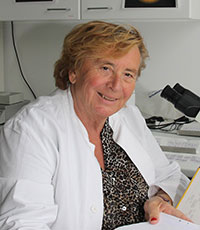
Vera Stejskal PhD
Dr
Vera Stejskal PhD
Associate Professor of Immunology, University
of Stockholm and 1st Medical Faculty at Charles University, Prague,
Czech Republic
Dr.Vera Stejskal received her doctoral
degree from Charles University in Prague, Czech Republic. She has worked
as a research scientist at the Institute of Experimental Biology and
Genetics in Prague, Czech Republic; at the Dept. of Immunology, The
University of Stockholm, Sweden; and as a Senior Research Adviser and
Head of Immunotoxicology Group at AB ASTRA, Safety Assessment, Södertälje,
Sweden. Dr. Stejskal is affiliated with the Dept of Clinical Chemistry,
Danderyd's Hospital and Karolinska Institute, Stockholm, Sweden, conducting
research in Clinical Immunotoxicology; and is affiliated to 1st Medical
Faculty at Charles University, Prague, Czech Republic, where Dr. Stejskal
teaches and directs research. Currently Dr. Stejskal is the owner of
MELISA® trademark and of MELISA® patent in all major European
countries Founder of MELISA® MEDICA foundation (1992). Dr. Stejskal
has a great research interest in the field of Immunotoxicology at the
Swedish Society of Toxicology (key person). She also is responsible
for saving the bestselling drug, Prilosec®, for Astra by setting
up a study that explained the mechanisms of drug side-effects in a one-month
toxicology study. Upon the repeating the study with parasite-naive animals,
no side-effects developed. MELISA®-like test was used for the demonstration
of immunological memory to worm antigens in conventional but not in
parasite-free animals. Dr. Stejskal is also a recipient of the EEC grant
on Biotech program "In vitro Immunotoxicology", adviser to
the World Health Organization, and is an expert witness to a US Congressional
Committee that in 2002 investigated vaccine safety and thimerosal allergy.
Dr. Stejskal is the author of more than 100 scientific publications
in the field of allergy and immunotoxicology.
2007 - The role of heavy and transition metals in cancer
Vera Stejskal, PhD, Dept of Microbiology and Immunology, 1st Medical Faculty, Charles University, Prague, Czech Republic
Transition metals like iron, copper, cadmium, lead, mercury, chromium, tin and nickel are involved in different pathogeneses through their known immunosensitizing and / or toxic effects.
Reports in the last two decades are closely relating the presence of such elements to free radical generation via Fenton / Haber-Weiss-reactions or ascorbate / thiols autoxidation processes, lipid peroxidation and formation of DNA strand breaks.
As repeated mitochondrial and nuclear DNA mutations are leading to malignant growth, we investigated the heavy metal content of breast cancer biopsies and compared them to the concentration in healthy breast biopsies.
A highly significant accumulation of iron, nickel, chromium, zinc, cadmium, mercury and lead was found in the cancer samples as compared with control group.
The clinical relevance of these findings was confirmed by an independent study by Dr Michael Godfrey from New Zealand. Dr Godfrey uses thermal imaging for screening for breast cancer. When an abnormal reading is observed, the patient in referred to hospital for breast biopsy.
In several patients, the pathological changes in the breast disappeared following the removal of dental amalgams combined with chelation therapy including vitamin C and EDTA given intravenously. The beneficial effect of vitamin and EDTA has been documented in scientific literature for the prevention (EDTA) and treatment of cancer.
Free radicals and inflammation are a common denominator of neurodegenerative diseases such as Parkinson disease, Alzheimer disease and multiple sclerosis.
Metal allergy is often found in patients with diseases of autoimmune origin, especially allergy to nickel, gold, mercury and palladium. Most of metal exposure originates from dental restorations such as amalgam fillings and gold crowns. With the help of an in vitro test – MELISA – one can detect the inflammation-triggering agent and thus facilitate the patient treatment.
The future clinical treatment of the diseases mentioned above should take in account the recent progress in understanding the mechanisms behind these diseases. Clinical trials should be conducted using antioxidants, detoxification substance such as glutathione and chelators.
Reference: Neuroendocrinology Letters Vol.27. Suppl 1. 2006


 BSAAM's Anti Ageing
Conference London, 38 Regent on the River
BSAAM's Anti Ageing
Conference London, 38 Regent on the River